
The industry
What are you really paying for?
Your business deserves clear pricing, useful work, and proof of what gets done.
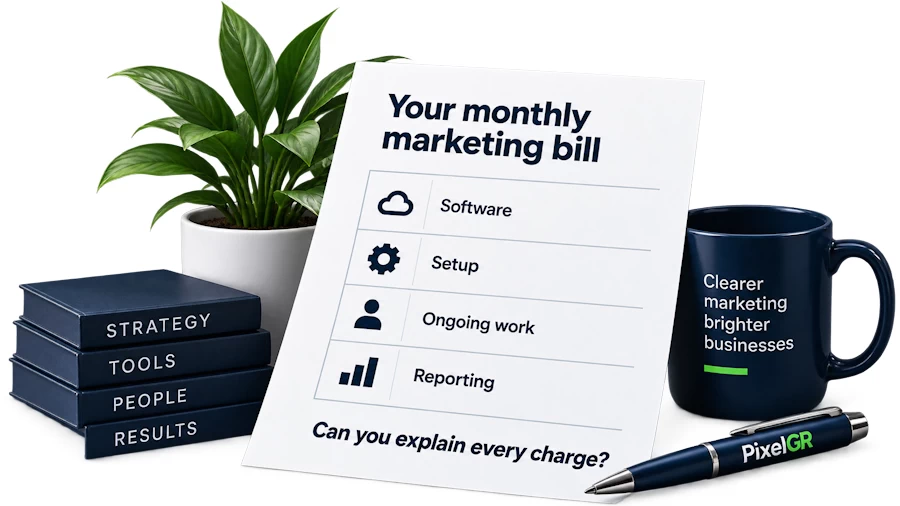
A higher fee should come with a clear explanation of greater value.
The real question
Expensive is not the same as valuable.
Strategy, specialist expertise, and hands-on service can justify higher fees. The problem is paying for work you cannot identify, understand, or verify.
- Vague deliverablesBroad promises can make it hard to see what you are actually paying for.
- Unclear software markupsSoftware costs can be bundled in different ways. Make sure you understand what you are paying for.
- Reports without useful next stepsA report should do more than show activity. Look for clear insights and actions you can use.
Ask these questions before you sign.
What work happens each month?
Ask for a list of the tasks done every month, who does them, and how you will see that they happened. "Ongoing optimization" is not a task. "Publish four articles and send a report linking to each one" is.
What is automated, and what needs a person?
Software is good at repeating checks and routine publishing. People are needed for judgment calls, changes to your design or content, and anything with legal weight. Knowing the split tells you what you are paying staff time for.
What software am I paying for?
Ask which tools are included, whether you get your own login, and whether the price covers the tool alone or includes someone's time. Bundling is fine when it is explained.
What costs extra?
Setup fees, extra pages, additional locations, specialist fixes, and rush work are common add-ons. Get them listed before you sign, with a price or an hourly rate for each.
What do I own if I leave?
Your domain, website files, content, accounts, and data should belong to you. Ask how you get them back, in what format, and whether there is a fee.
What are the contract and cancellation terms?
Check the length of the first term, what happens when it ends, how much notice you need to give, and whether any fees apply when you cancel.
Compare the scope. Then compare the price.
| What to compare | Software subscription | Managed service |
|---|---|---|
| Included work | Defined product functions | Defined staff deliverables |
| Human involvement | Confirm support and limits | Confirm hours and responsibilities |
| Extra charges | Check setup and add-ons | Check changes and specialist work |
| Evidence | Activity and issue reports | Work logs and agreed reporting |
The PixelGR approach
Clear products. Clear prices. Visible work.
-
We build our software
Start with the business need, choose the relevant tools, and understand the service before you buy.
-
We explain what is included
Clear product features, service deliverables, and any additional costs, all in plain language.
-
We show the work performed
You can see what gets done, with reporting that is focused on useful information.
Know the boundaries.
- AI visibilityImproving website access and information does not guarantee a recommendation, ranking, or customer inquiry.
- AccessibilityFindings and repairs should have a defined scope. Ask which issues need manual review or specialist help.
Straight answers before you buy.
Why can prices differ so much?
Two quotes can describe very different work. One may be software you run yourself, the other a team doing the work for you, with different hours, specialists, and reporting. Compare what is included before you compare the price.
When is a managed service worth paying for?
When you do not have the time or the expertise to do the work yourself, and the provider can show exactly what they will do each month. If the work cannot be described, it cannot be checked.
What should a useful monthly report show?
What was done, what changed, what still needs attention, and what happens next. Activity counts on their own tell you very little. Clear next steps tell you a lot.
What should I check in a contract?
The term length, the renewal and cancellation terms, what is included, what costs extra, who owns your website and content, and how you get your data back if you leave.
Make your next marketing dollar easier to explain.
See the products, understand the scope, and choose what your business needs.